From sustainability to experience: designing a workplace people choose to use
A major workplace transformation by the Flemish Government shows how sustainability, flexibility and collaboration technology are reshaping the office into a place people choose to use
The Flemish Government, representing more than 10,000 employees across over 300 sites, approached the redevelopment of its Brussels hub with the challenge of how to make the office somewhere people actively choose to use.
Hybrid work has reduced the need to be present. As a result, the role of the office has shifted towards somewhere that needs to support interaction, reduce friction and offer conditions that are difficult to replicate elsewhere.
The redevelopment of the Marie-Elisabeth Belpaire building in Brussels, Belgium reflects this change, bringing together sustainability, workplace design and collaboration technology into a single, coordinated approach.
Sustainability built into the system
The project reused 68% of materials on-site, alongside introducing solar panels and more efficient network infrastructure. Technology decisions were assessed for long-term impact, including energy use and lifecycle, rather than immediate performance alone.
This points to a wider shift. Workplace investment is increasingly judged on durability and efficiency, with IT and real estate decisions contributing directly to long-term cost and environmental performance.
Making the office worth the commute
Flexibility was already embedded across the organisation. Employees can work remotely or across multiple locations. The challenge was not enabling hybrid work, but making the office matter within it.
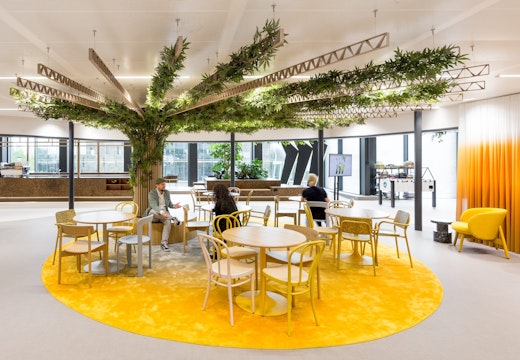
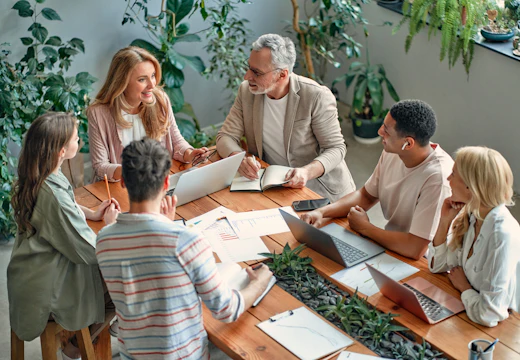
The Brussels hub supports a range of work modes, from focused tasks to informal interaction and structured collaboration. Quiet zones sit alongside shared social spaces and meeting environments. The intention is to prioritise the types of work that benefit from proximity, particularly those that rely on interaction, coordination and team cohesion.
Consistency as a condition for collaboration
Meetings now sit at the centre of how work happens, but hybrid setups often introduce friction through inconsistent room configurations, devices and platforms.
To address this, the Agency for Facility Operations prioritised ease of use, flexibility and security. The aim was to create a consistent experience across every meeting space, regardless of device or conferencing platform.
This level of standardisation is not a detail. Without it, small points of friction accumulate, affecting participation, meeting quality and ultimately how teams work together.
From installation to ongoing operation
With more than 1,000 meeting spaces across the estate, the challenge extends beyond setup. These environments require continuous oversight, including updates, performance monitoring and integration into existing IT systems. Centralised management allows teams to maintain standards and respond to issues more quickly.
This marks a shift in how collaboration spaces are treated – from static installations to actively managed infrastructure.
Where value is actually created
At the user level, expectations are simple. Meetings should start quickly, run reliably and work in the same way every time. When this does not happen, people disengage or avoid using the space altogether. When it does, collaboration becomes easier and more consistent. The value of these systems is therefore not defined by features, but by how effectively they remove friction from everyday work.
A more demanding role for the office
The Flemish Government’s approach reflects a wider pattern. Hybrid work has stabilised, but workplace expectations have increased. Offices are judged on how well they support interaction, how reliably they function and how closely they align with organisational priorities such as sustainability.
The office is no longer a default setting for work. It is one option among many. And it has to compete.