Working from home back on the agenda as energy crisis extends
As the US-Iran war sends shockwaves through global energy markets, could the relationship between autonomy and interaction in the workplace be about to change once again?
As war has raged in the Middle East and missiles have rained down on vital oil and gas infrastructure, the world of work has once again found itself at the centre of things.
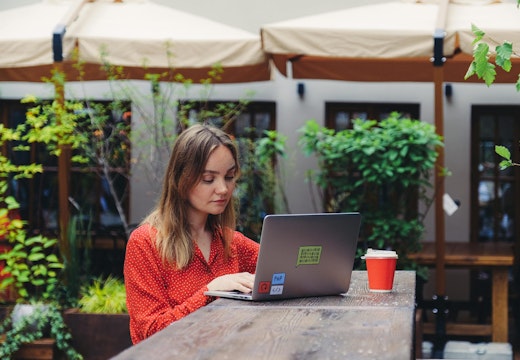
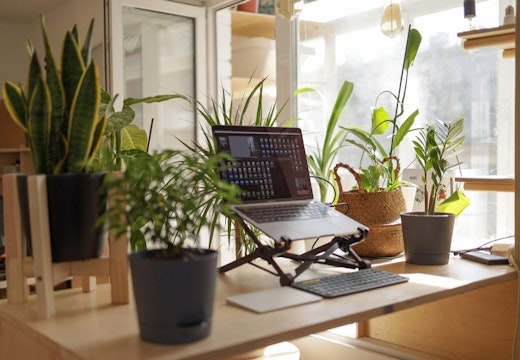
Working from home is back on the map as one of the solutions being proposed to mitigate a global energy crisis that is likely to hit hard whether the conflict ends quickly or drags on. After three years of steady focus on RTO (return to the office), commuting to the workplace could again be off limits in many countries to conserve energy, according to advice from the International Energy Agency.
This latest example of geopolitical turbulence only serves to illustrate the extent to which the workplace is in a state of flux today. In such conditions, it’s not unusual for several theories of change to compete for attention. However, some theoretical models are more robust and enduring than others; they can be used to explain what’s happening to the workplace over several decades – not just a few weeks.
Autonomy and interaction
Dr Francis Duffy’s foundational work on autonomy and interaction falls into that category. It is 60 years since the co-founder of the DEGW architectural firm – who died in February 2026 aged 85 – completed his Doctorate at Princeton University. Duffy’s groundbreaking PhD thesis explored the relationship between how much control workers have over their work and how easily they can interact with others as a basis for designing office environments to suit different needs.
The outline of Duffy’s autonomy-interaction matrix, which challenged the resource-hungry office, was conceived within a decade of the Suez Crisis of 1956. It was in existence well before the oil crisis of 1973 and the first Gulf War of 1991 – each of them forerunners to today’s US-Iran war in terms of threatening energy markets and therefore disrupting established working patterns. It was a framework that formed a cornerstone of DEGW’s consulting work in the 1990s, helping to make the practice one of the undisputed pioneers of workplace design.
The impact of information technology on both autonomy and interaction in the workplace was something DEGW anticipated clearly: greater flexibility in terms of where to work allied to more connectivity for collaboration with others changed the game. One can even view the development of the workplace over the past 30 years through the prism of how the forces of autonomy and interaction combine.
Reform of bureaucracy
In the late 1990s, DEGW advocated for reform of a bureaucratic workplace offering a traditional mix of low autonomy and low interaction. Advances in IT unlocked the gate so that by the 2000s, companies were experimenting with new ways of working that ramped up social and professional interaction in the office without loosening their control over workers in terms of time and place.
This was the low autonomy-high interaction workplace full of meeting rooms, social staircases and breakout zones, which dominated for two decades right up to 2020 and the first Covid-19 outbreak. In the global pandemic that followed, however, the workplace model flipped overnight to a high autonomy-no interaction model. Offices were shuttered, curtailing collaboration. Employers had no choice but to grant greater personal autonomy to people who worked remotely.
Protecting wellbeing
Since the global pandemic has subsided, one can view the rise of hybrid working over the past five years as a way to rebuild interaction in the office while at the same time protecting the wellbeing of employees who don’t want to their autonomy affected or personal control sacrificed. This is the high autonomy-high interaction workplace that most large employers aspire to create today.
As Despina Katsikakis of Cushman & Wakefield, a former DEGW senior leader, has explained in an interview with WORKTECH Academy: ‘The future of productivity will depend on a return to the office as a place of social connection, and on giving employees more opportunities for face-to-face interaction as well as more autonomy.’
Will a resurgence in home working driven by the impending global energy crisis shift the model once again? One can easily see the Gulf states and also economies further afield telling their people to work from home to conserve the resources involved in making car journeys, running transport networks and lighting office buildings.
‘One can see the Gulf states telling their people to work from home to conserve the resources’
So, will we find ourselves back in the territory of high autonomy but low interaction as remote work grows? The commercial real estate sector will shudder at the prospect, but lessons have been learnt from how the Covid-19 crisis shattered culture, collaboration and learning. Companies should be better prepared this time round to cope with a steep drop in workplace interaction – and bolstered by the responsible use of autonomy that workers showed back in 2020.
One thing is clear. In a world in flux, nobody should be in the least surprised that workplace strategy will remain volatile. All we can do is hang onto those theories of change that explain what’s happening over the long run.