Reflecting on 2025: a year of contrasts in workplace environments
From competing expectations to rebalancing the office attendance equation, 2025 has been a year of contrasts in the workplace – and with it comes great opportunity for change
Far from settling into a ‘new normal’, 2025 has been a year of contrasts, contradictions and ‘U-turns’ in the workplace.
On one side, late adopters are finally stepping into flexible ways of working. The uninterrupted rise of real estate prices, combined with the consolidation of working-from-home practices, is pushing organisations towards unassigned desks and more agile models. Institutions under financial pressure, such as universities, are being forced to rethink space efficiency, often without having fully absorbed the cultural shift these models demand.
On the other side, the ‘back to office’ movement is gaining ground. Some organisations are moving away from unassigned desks and large-scale remote working, often described internally as a management nightmare. Security constraints, difficulties in applying consistent principles across teams, and unmet collaboration needs are common arguments. Financial institutions and creative industries, in particular, are questioning what to do next while aligning workplace strategy more closely with how their businesses actually operate. These firms have the added pressure of doing this under increasingly vocal media scrutiny.
Then there are those who are staying the course. Many organisations are managing hybrid working complexity through a mix of digital investment such as sensors, booking systems, utilisation data, to understand (and sometimes police) how offices are used, alongside seasoned change management programmes designed to help people adopt flexible ways of working. Reducing the real estate footprint, however, comes at a cost: sustained investment in technology and change; and growing pressure on middle managers expected to juggle business performance, office attendance expectations, and hybrid arrangements all at once.
Rebalancing the equation
A few years ago, forecasts suggested that shifts in the economic cycle would rebalance the employee-employer relationship from employee-driven to employer-driven priorities. That shift is now clearly visible. Regardless of their maturity in agile or flexible working, many organisations are introducing mandates that increasingly structure working-from-home patterns.
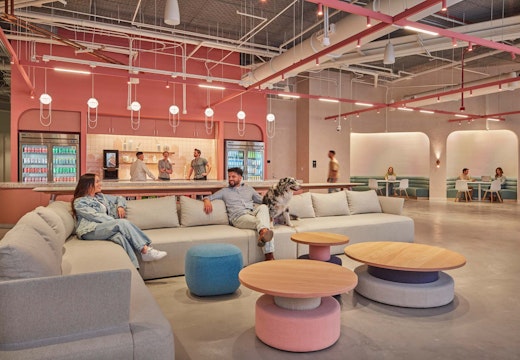
At the same time, companies are investing in wellbeing-led spaces while questioning the very purpose of their real estate footprint. Pressure to be present in the office is rising, even as employees continue to voice frustration about noise, distraction, and the difficulty of focusing. For many, the unspoken calculation is simple: it feels safer to keep a job and comply. This sentiment is only reinforced by the rapid acceleration of AI and growing fears around job displacement and role redesign.
These are undeniably interesting times.
On one hand, organisations are surrounded by an unprecedented volume of workplace data, all demanding interpretation and meaningful application in day-to-day decisions. On the other, expectations of office space continue to evolve. While many organisations are trying to entice employees into the office – often appointing dedicated workplace experience leaders – the future workplace will require more creative, integrated solutions that bring together technology, human behaviour, and a deeper understanding of the built environment.
Balancing humans and machines
AI, the human desire to work together, and the hybrid nature of work will shape the next generation of office concepts. Away from the production-line logic of rows of desks, workplaces will increasingly support team gatherings, individual focus, collaboration with AI ‘colleagues,’ and interaction with remote team members. These are nuanced and complex interactions, requiring a careful balance between human experience and technology-enabled environments – and a fundamental rethink of how we design space.
As a result, the very concept of ‘working from the office’ is changing. Future solutions will need to prioritise quality of experience across different activities, where human perceptions – sound, light, temperature, location, and intention – are not afterthoughts but essential design inputs, supporting both individual and collective needs.
What’s coming next? Heraclitus, around 500 BC, believed everything comes into being through the ‘conflict of opposites.’ The world existed in a state of constant flux, and that tension and contradiction were the source of both change and harmony. The workplace is no different. I am certain we will see some very interesting solutions emerge in the years ahead.