Sound as a structure: why workplace wellbeing needs to be felt
What if workplace wellbeing wasn’t something you downloaded, but something you leaned on? As stress and disconnection become more common features of work, organisations are rethinking how wellbeing is delivered
For much of the past decade, workplace wellbeing has been treated as an add-on ‘benefit’, rather than a staple of workplace infrastructure. But as stress, burnout and distraction continue to rise, organisations are being forced to confront an uncomfortable truth. Employee wellbeing cannot be bolted on to unhealthy environments.
At the recent WORKTECH London event in November, keynote speaker and author of the book Leader as Healer, Nicolas Janni explained that ‘we are in a pandemic of disconnection’. As a result, most workers are currently spending just 10% of their time in a state of ‘flow’ and that we have normalised spending 90% of our time in an unsatisfying and ineffective mindset. In this context, we need to take restorative wellbeing as part of our professional development seriously.
Designing for wellbeing
We often don’t associate the workplace as a place to restore our wellbeing. Instead, we design workplaces around the principles of productivity, connection and efficiency. In more recent years, new amenity spaces have appeared in the form of wellness rooms and gym studios to encourage employees to step outside of their work and take a break. Yet, without explicit permission from leadership to use these spaces, they often lay vacant.

Against this backdrop, a new class of wellbeing infrastructure has been designed to bring restorative wellbeing to employees, without necessarily disrupting their working rhythm. At the intersection of art, neuroscience and spatial design sits ‘Sonaforms’, sculptural, sound and vibration-emitting tactile furniture created by artist and technologist Dr Julie Freeman and produced by her Margate-based studio, ShapedSound.
Unlike conventional speakers or noise-cancelling headphones, Sonaforms communicate sound through structure rather than air. Elegantly crafted from sustainable wood and shaped to invite leaning, sitting or resting, the pieces transmit low-frequency sound as gentle vibration through the body. The result is a calming, parasympathetic response that users often describe as grounding and restorative.
Sound you hold
Dr Julie Freeman’s practice sits at the intersection of art, science and lived experience. A neurodivergent artist and pioneer in data-driven art, her work has long explored how humans connect both physically and emotionally.
In an interview with WORKTECH Academy, Freeman explained that ‘I’m a very sensory person. I first explored sound as a physical feeling 20 years ago in a piece of work called The Lake. It was an immersive installation inside a three-metre wide, nine-meter-tall metal cylinder, where I recorded fish movement and composed music from their data. The sound resonated through and around the metal structure, and because of the range of frequencies, you could physically feel it through your body. That experience really stayed with me. It made me want to keep working with sound that wasn’t just something you hear, but something you feel.’
Sonaforms are embedded with vibroacoustic technology offering a material counterpoint to the visual and cognitive overload that often dominates contemporary workplaces. Dr Julie Freeman commented that ‘the different frequencies emitted through the furniture allow people to physically hold onto sound’. The impact of this has a restorative impact, as the regularity of the vibration has scientifically been proven to reduce stress.
Originally developed during the pandemic and shaped from the curves of her own body, Sonaforms were a response to enforced distance, digital fatigue and the loss of tactile, grounding experiences. ‘During Covid, when everything became digital and distant, I felt a strong pull towards making something people could actually touch. I’ve worked a lot with physicalising data, and that period compelled me to apply that thinking to create something that could be held onto’, Freeman said.
Sonaforms have the appearance of high quality artwork and act as functional furniture. They have already been deployed in cultural institutions, schools and conferences, including TED and WORKTECH events, where they acted as informal recharge spaces where people can pause, recalibrate and reconnect before re-entering intense social or cognitive environments.
Increasingly, they are being positioned for workplace settings in breakout zones, wellness rooms, reception areas and hybrid collaboration spaces where emotional and cognitive regulation matters as much as performance.
From universal design to neuroinclusion
One of the most compelling aspects of Sonaforms is their relevance to neuroinclusive workplace strategies. As organisations rethink how to design for diverse sensory needs, there is growing recognition that quiet rooms and policies are not enough.

For neurodivergent employees, particularly those sensitive to noise or visual distraction, the open office can be exhausting. Sonaforms offer a non-verbal, non-digital way to self-regulate. Because they rely on touch and vibration rather than focused listening, they do not demand concentration in the way meditation apps or guided audio often do, and they can be used together with others
Yet their appeal is not limited to any one group. As Freeman commented, ‘the Sonaforms create a space for everybody – flattening the hierarchy between neurotypical and neurodivergent people’. This is where the project aligns with principles of universal design, as tools that support neurodivergent workers tend to benefit everyone.
A short, restorative sensory pause can improve focus, creativity and emotional resilience across the workforce.
Places to recalibrate
Sonaforms ultimately represent a broader shift in how organisations think about workplace investment and wellness infrastructure. As hybrid work decentralises desks and workflows, the office’s value increasingly lies in what cannot easily be replicated remotely, including shared experiences with colleagues and a sense of connection.
Backed my science and research, there is a mounting case for designing environments that recognise humans as physical, sensory beings, not just knowledge workers tethered to screens.
As pressures on attention, mental health and inclusion continue to rise, such moments of recalibration may prove less like luxuries, and more like essential infrastructure for the future of work. Sonaforms do not promise instant optimisation or productivity hacks, but they offer something arguably more radical, permission to pause in the office.
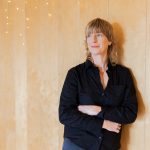 Dr Julie Freeman, a neurodivergent artist and technologist known for blending art with data and science. Julie is a TED Fellow and world-renowned pioneer in the use of data as an art material. She’s dedicated her life to understanding the complex yet subtle connection between nature and our human interaction with it. Her body of work as an artist can be found at www.translatingnature.org