Dynamic access: how digital identity frameworks are revolutionising the workplace
Digital ID is taking the friction out of work; streamlining processes, cutting costs and giving businesses their valuable time back. A report by HID and WORKTECH Academy examines what lies beyond access control
As the way we work continues to evolve, so does the role of identity; transforming as part of a broader transition towards frictionless, data-driven workplaces. Remote working, cloud services and flexible schedules have become the norm and with such, organisations are turning to digital centric identity models. The traditional blueprint – where physical access cards were tied to building entry – is being scaled back across the workforce, often due to its association with more intensive management protocols.
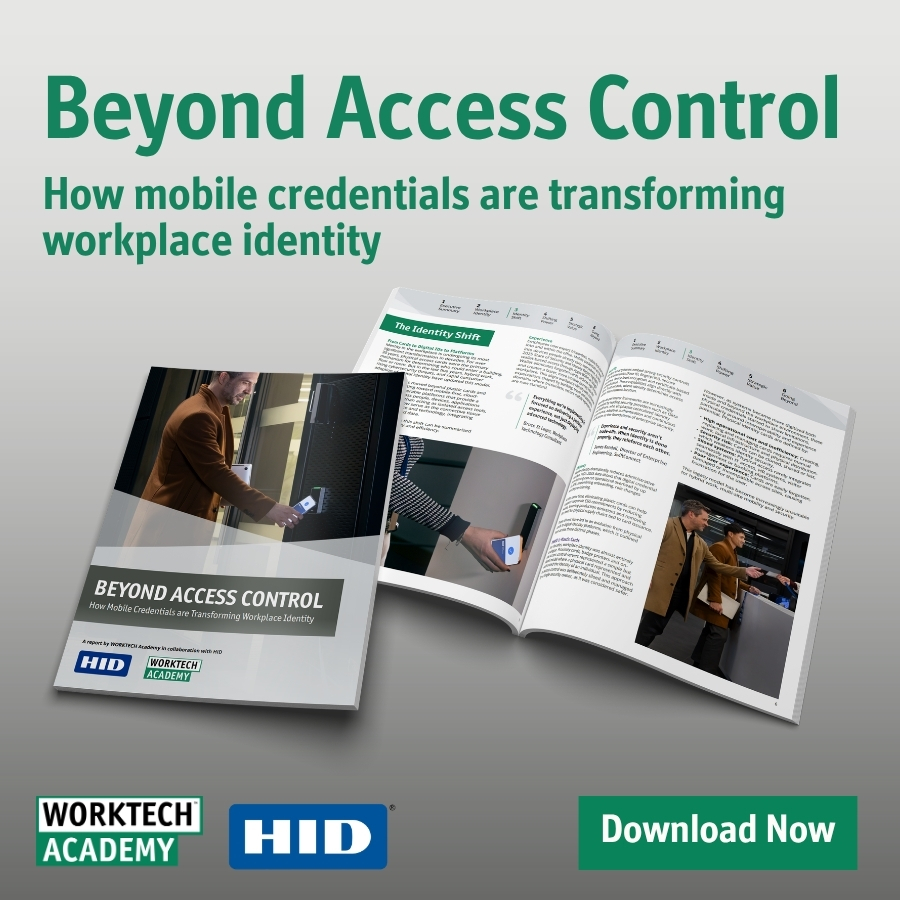
This juxtaposition is highlighted in a new report by WORKTECH Academy and HID, titled ‘Beyond Access Control: How Mobile Credentials are Transforming Workplace Identity.’
Mobile credential growth has been highlighted as a top workplace trend, with nearly two-thirds of organisations already deploying or planning to deploy mobile identity systems according to HID’s recent State of Security and Identity report. Wallet-based access, usually though Apple Wallet or Google Wallet, eliminates the issues of forgotten cards, reduces login friction, and fosters a more intuitive journey into the workplace; while utilising the strong biometric control already embedded into mobile systems.
Access from anywhere
This capability aligns directly with Zero Trust models, where identity is the key in determining access, rather than a network location. James Kendall, Director of Enterprise Engineering at SwiftConnect noted that ‘experience and security aren’t trade-offs. When identity is done properly, they reinforce each other. The card and mobile are just the medium. The permissions, logic and security all live within the identity platform.’
Mobile credentials are forcing organisations to modernise identity governance and integrate it properly into their systems, subsequently reducing administrative burdens. HID’s 2025 data details that digital credential provisioning can cut operation overhead by up to 60%, streamlining onboarding, role changes and deprovisioning.
Digital identity has gained momentum under a plethora of data intuitive qualities. Mobile credentials don’t just provide stronger security with their authentication and encrypted credential storage, they also breathe room into a more frictionless digital journey; one that aligns with an employee’s experience of banking, travel or retail. Digital identity systems provided via mobile also allow IDs to be linked more effortlessly to cloud-based IAM, HR systems, and enterprise workflows.
With such, an identity platform ends up doing a lot more than just granting entry to a building. It becomes a single source of verification for who a person is, what permissions they have, and what they can access across a working day. Identity platforms like these allow for dynamic access decisions based more wholly on context, rather than simple possession of a physical card.
In contrast, physical identity cards are defined by a high operational cost – usually tied to replacing and managing cards through manual work – as well as security risks associated with easily cloned, shared or lost cards.
An intuitive industry
As cyberthreats and political turbulence increase risk to corporate enterprises, the question of identifying the right personnel has become too important, too cross-functional and too risky to sit in one unmalleable silo. Physical access also rarely integrates seamlessly with IT systems, HR, visitor management or booking platforms; while cards are also easily forgotten, damaged or incompatible across sites. Subsequently, this legacy model has become increasingly unsuitable for hybrid work, multi-site mobility and security.
Nearly two-thirds of organisations are either using mobile ID already, or planning on integrating it, increasing significantly from previous years. And, the UK digital identity service provider sector now includes 266 firms, totalling more than 10,000 employees; reflecting the rapid growth of interoperable ecosystems.
The evolution of the industry mirrors wider public familiarity and comfortability with digital identity. And while enterprises become more fluid and interconnected, they will ultimately depend on robust, intelligent identity platforms that manage to orchestrate people, spaces, devices and digital systems seamlessly.
Read the full report, here.